
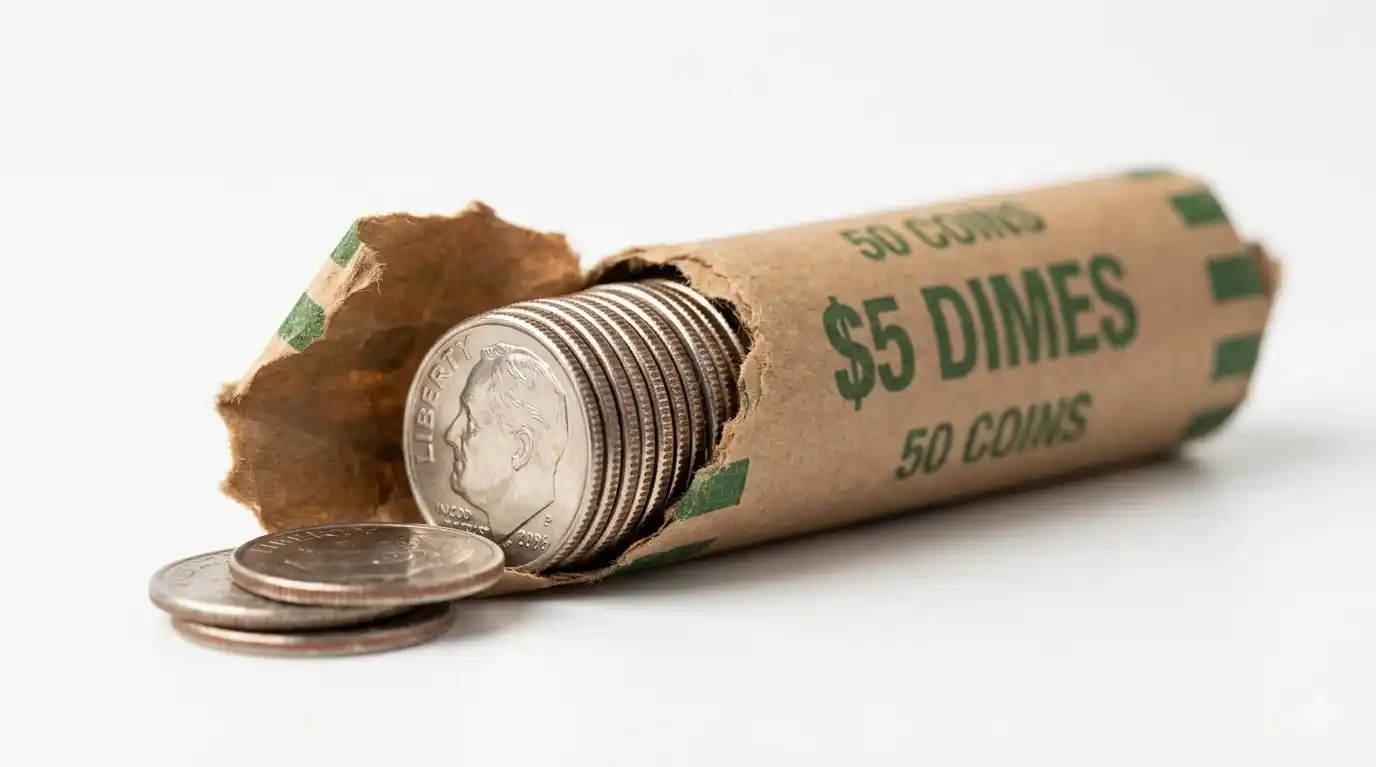
The number of dimes in a roll seems straightforward—until you consider why that standard exists and how it’s actually used.
Banking systems in the United States rely on strictly regulated packaging methods to simplify accounting and logistics.
Standard Quantity and Total Value
A banking roll of dimes always contains a fixed number of coins approved by financial regulators.
Following this rule guarantees the accuracy of balance sheets in vault operations.
Quantity per roll → 50 units.
Total face value of one roll → $5.00.
Color coding on the paper wrapper makes it easy to identify the denomination without reading the text.
Green stripes on the wrapper are officially reserved for 10-cent denominations.
Physical Dimensions and Weight of Wrapped Units
The weight of a full roll serves as a critical parameter for verifying integrity without opening the package.
Digital banking scales detect deviations that might suggest foreign objects or missing coins.
Pure weight of 50 coins equals 113.4 grams.
Paper wrapping adds approximately 0.5 grams to the total mass.
Standard length of a tightly packed roll is roughly 67.5 mm.
Tolerance for weight loss due to wear on older coins should not exceed 0.2 grams.
Detecting a weight below 113 grams automatically sends the roll for manual inspection.
Rare Findings in Standard Rolls
Searching for rare items in bank rolls remains a valid method for building collections today.
Despite the mass production of modern coins, high-value specimens occasionally appear in circulation.
Coin Variety | Record Value | Reason for Value |
1942/1 Mercury | $30,000 | Over-date production error |
1964 Roosevelt | $5 | High Silver content |
1982-P No Mark | $200 | Missing mint identification |
Price growth for 1964 silver dimes correlates directly with the current market cost of precious metals.
Market value for such coins increases by approximately 9.5% for every 10% rise in silver prices.
Annual value growth for rare production errors averages 4% when the surface remains in perfect condition.
Logistics and Bulk Processing
Financial institutions use specialized trays for storing and transporting large quantities of rolls.
Standard bank boxes contain a specific number of units to streamline heavy-duty operations.
1 Roll = $5
1 Pack (10 Rolls) = $50
1 Box (50 Rolls) = $250
Total mass of a dime box is approximately 5.67 kg excluding the weight of the cardboard container.
Cash transport in 2026 utilizes pallets that can hold up to 200 such boxes.
RFID tags on each box allow for real-time tracking of funds during transit.
Paper Wrapping Quality Standards
Wrapping material must possess specific burst strength to prevent accidental opening during handling.
Federal guidelines require paper with a density of at least 60 grams per square meter.
Packaging quality requirements:
Tightly crimped edges
Clear denomination markings
Surfaces free of oil or stains
Automatic wrapping machines produce crimped edges at a rate of 20 rolls per minute.
Eco-friendly wrappers made from recycled fibers are becoming the standard in 2026 without sacrificing durability.
Causes of Weight Variations in Circulation
Coins lose microscopic metal particles over decades of friction during use.
Older Roosevelt issues might weigh 1% to 2% less than the official technical standard.
Reasons for mass changes: Surface wear → Weight loss of 0.02 grams per coin. Dirt accumulation → Weight gain of 0.01 grams per coin. Metal oxidation → Negligible mass changes.
Verification through weight remains the fastest audit method for high-volume cash centers.
Modern sensors compensate for metal expansion caused by temperature changes in unheated vaults.
Differences Between Roll Types
Two primary types of coin packaging circulate in the 2026 cash market.
Each version has unique features for different secondary market needs.
Customer Wrapped Rolls — Hand-packed or rolled by bank clients.
Machine Wrapped Rolls — Formed on specialized equipment at mints or service centers.
Machine-wrapped units are considered more reliable due to counting precision and tight crimping.
Unopened rolls from the Philadelphia (P) or Denver (D) mints often trade above face value in their year of release.
Premiums for uncirculated rolls can reach 20% over their original value within five years.
The Utility of Dimes in Payments
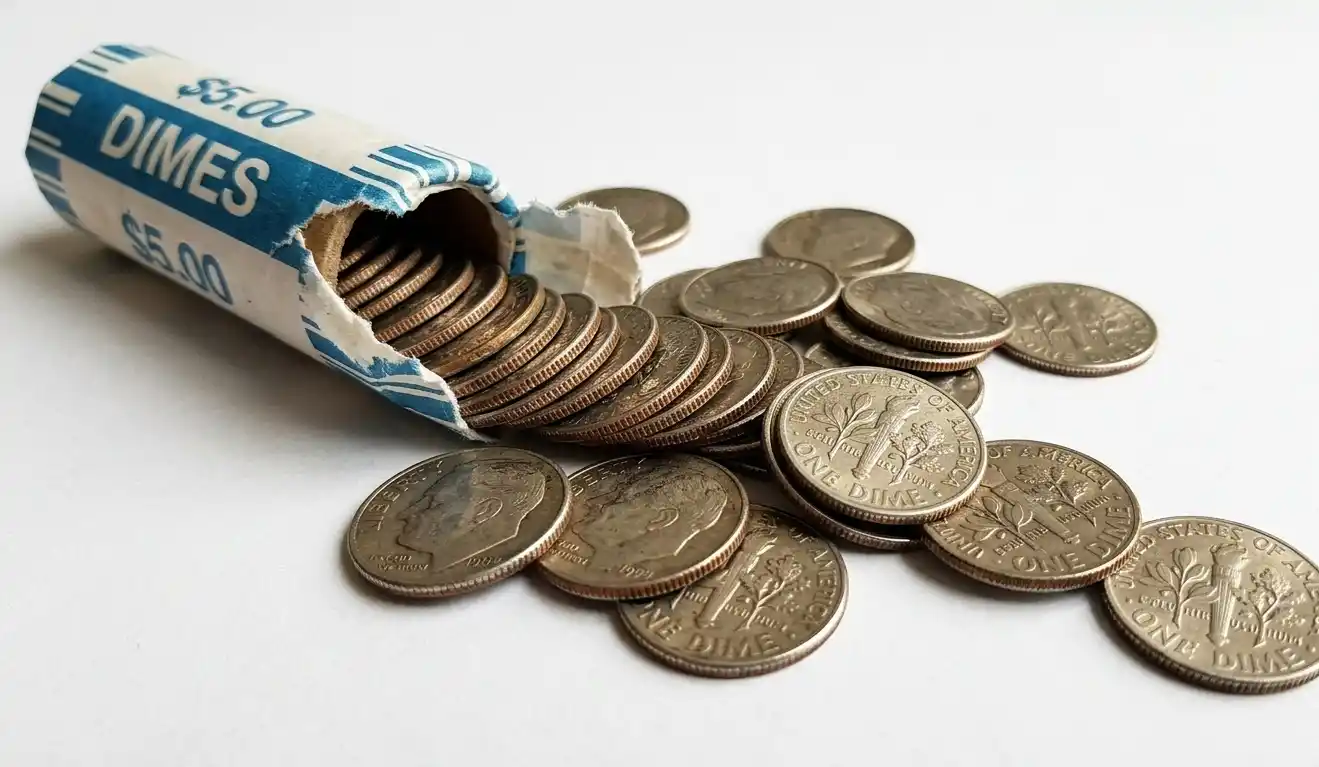
Even with the rise of digital transactions, 10-cent coins remain vital for self-service sectors.
Vending machines and parking meters require physical change for consumer convenience.
Retail usage statistics:
Grocery stores use up to 15 rolls per day per register.
Automated laundromats require up to 50 rolls weekly.
Bank branches provide up to 5 rolls to individuals per transaction without fees.
Demand for dime rolls remains stable, providing liquidity for small-scale physical commerce.
Global Compatibility and Machine Calibration
United States dimes possess unique dimensions that distinguish them from foreign currency.
The thickness of 1.35 mm acts as a security barrier against the use of foreign substitutes in coin slots.
Dimension comparison: US Dime: 17.91 mm 10 Euro Cents: 19.75 mm 5 Canadian Cents: 21.20 mm
Size differences exceeding 1 mm allow separators to filter out foreign objects effectively.
Coin validators in 2026 are calibrated using the electromagnetic signature of the copper-nickel metal and cheking the coins via a free coin value checker app.
Storage and Preservation of Bulk Coins
Long-term storage inside paper wrappers can trigger chemical changes in the metal.
Sulfur found in low-quality paper causes darkening on the edges of the end coins.
Investor storage guidelines:
Temperature between 15 and 20 degrees Celsius.
Humidity levels below 45%.
Use of plastic tubes instead of paper for storage exceeding twelve months.
Patina formation on end-coins reduces their visual appeal by approximately 15%.
Professional vaults utilize dehumidifiers to protect banking reserves from surface damage.
Tracking Production Origin Through Packaging
Markings on boxes and occasionally on individual rolls indicate where the cash was produced.
Production data in 2026 is integrated into barcodes found on wholesale containers.
P — Philadelphia
D — Denver
S — San Francisco (primarily for collector sets)
San Francisco coins found in standard rolls are extremely rare and value can exceed the face amount by 50 times.
Finding such items in general bank shipments remains a statistically unlikely event.
Practical Value of Counting Precision
An error of just one dime per roll leads to significant discrepancies across large banking networks.
The Federal Reserve allows for a minimal margin of error during high-speed machine packaging.
Consequences of counting errors: Cash shortages → Requirement for immediate inventory audits. Fund surpluses → Violation of financial reporting protocols. Machine jams → Shutdown of cash processing lines.
The free coin identifier app in 2026 allows for verifying coin counts inside a roll without breaking the paper seal.